Why Your GMP Scheduling Spreadsheet Costs More Than It Looks Like It Does
A QA hold lands on Tuesday, someone spends most of a day rebuilding the week by hand, and the schedule that finally ships is the first one that works rather than the best one available.
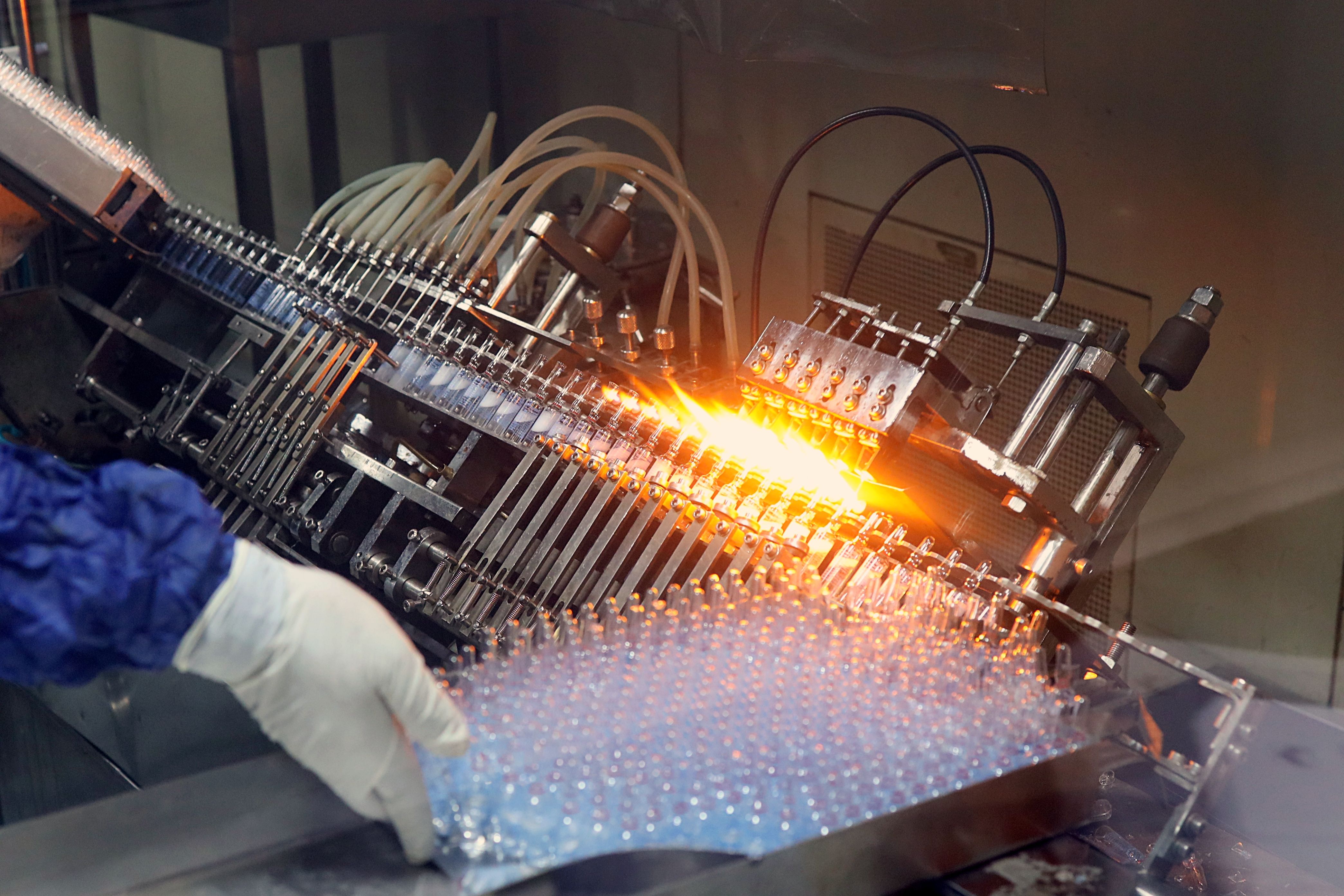
The spreadsheet itself isn't the problem. The problem is what happens every time reality changes, and the schedule has to change with it. A QA hold lands on Tuesday, and someone spends most of a day manually reworking every downstream dependency by hand. That's why the schedule a plant actually runs is the first one that works, not the best one available. That gap compounds into lost capacity, longer investigations, and a scheduling function that can't survive its one expert quitting.
The rebuild tax: a full day, every disruption
A cleaning-validation window expires Thursday morning. A QC hold lands Tuesday afternoon. Either event forces someone to rework every downstream dependency in the workbook by hand, checking each move against constraints scattered across columns nobody labelled for this purpose, and to land on a usable answer before the next shift plans against it.
Run that math across a year and the real cost isn't the hours lost to any single rebuild. It's the schedule quality a plant gives up because nobody has time left to ask if a better sequence exists.
One file, no owner, no memory
Ask five people at a site to open "the schedule" and count how many versions come back. Packaging is working from Tuesday's file. Fabrication has Thursday's. Alignment holds until the next disruption breaks it again.
The deeper issue is where the scheduling logic actually lives. The rule that a changeover needs 90 minutes. The assumption that a campaign can't run past nine batches. The judgment call on which suite absorbs a delay first. None of that exists on paper. It lives in formulas one person built, and in a way of thinking that lives in that person's head.
When that planner is out sick, the schedule degrades quietly. When they leave, the site doesn't lose a spreadsheet. It loses the only working model of how its own plant runs, and there's no version of it written down anywhere to hand to the next person.
That's a single point of failure sitting in the middle of production capacity, not a staffing gap.
An investigation with nothing to investigate
This is where the first two costs turn into a third one, and it's the one that's hardest to walk back.
When a formula gets adjusted, a hold-time assumption widened, a rounding error fixed, the workbook keeps none of it. No name, no timestamp, no reason. None of this shows up until something goes wrong.
When it does, a batch sequenced against a stale assumption, a changeover shortened by a formula nobody remembers touching, the deviation still needs an investigation, and that investigation has to land on a root cause. A deviation that can't be traced to its cause because the tool that caused it left no record doesn't close faster for being informal. It stalls, gets escalated, and eats far more QA time than the original error would have cost to prevent. The spreadsheet didn't create the deviation. It removed the ability to explain it, and that's the more expensive problem.
What locking the file fixes, and what it doesn't
Closing all three gaps means moving the scheduling logic out of the workbook entirely, into a specified constraint model that a solver enforces directly: every hold time, changeover rule, and qualification constraint satisfied at once, with a repair engine that rebuilds the week automatically when a hold or stoppage hits, instead of costing a planner a day.
Five questions worth asking this week
Two or more "no" answers here means the scheduling workbook is costing more than it looks like it is.
- If the person who built the schedule left tomorrow, could someone else run next week's plan without recreating their logic from scratch?
- After the last unplanned hold or stoppage, how long did the rebuild take, and can you name the number?
- Can you produce, right now, the actual reason a specific batch ran when it did?
- Is there one current version of the schedule, or does each function keep its own?
- When did anyone last have time to ask whether a better sequence existed, rather than settling for a workable one?
Alexandre Clarizio is founder and CEO of Kaster Technologies, which builds AIM, a decision intelligence platform for GMP pharmaceutical manufacturing.
Frequently asked questions
- What does an Excel-based production schedule cost a GMP site?
- The direct cost is planner time lost to manual rebuilds after every disruption, close to a full day per event. The larger cost is capacity nobody sees: without room to optimize, sites run the first feasible schedule instead of the best one, and that shows up as missed batches and lower throughput on constrained lines.
- Why isn't a locked, access-controlled spreadsheet enough?
- Access control fixes who can change the file. It doesn't fix how long a rebuild takes, and it doesn't document the logic buried in the formulas. Those two gaps are what drive the recovery-time cost and the single-point-of-failure risk.
- Does a production scheduling spreadsheet need to be validated under GMP?
- It depends on what the spreadsheet decides. A planning aid that feeds no GMP-controlled record sits outside validation scope in most cases. Once formulas compute hold times or clean windows that determine when controlled events happen, the absence of an audit trail becomes a data integrity problem, whether or not the file is formally in scope.
- Does replacing the scheduling spreadsheet mean replacing the ERP?
- No. The ERP keeps master data, demand planning, and production orders, and does that job well. A scheduling layer reads from it and doesn't write back to it.
- What happens to the existing spreadsheets during a transition?
- They become the input. The workbook is the most complete record of a site's real scheduling logic that exists, even though nobody built it as documentation. Pulling that logic into a specified model is the first deliverable of the transition, not something you throw away at the end of it.