Everything started with a prescription that couldn't be filled
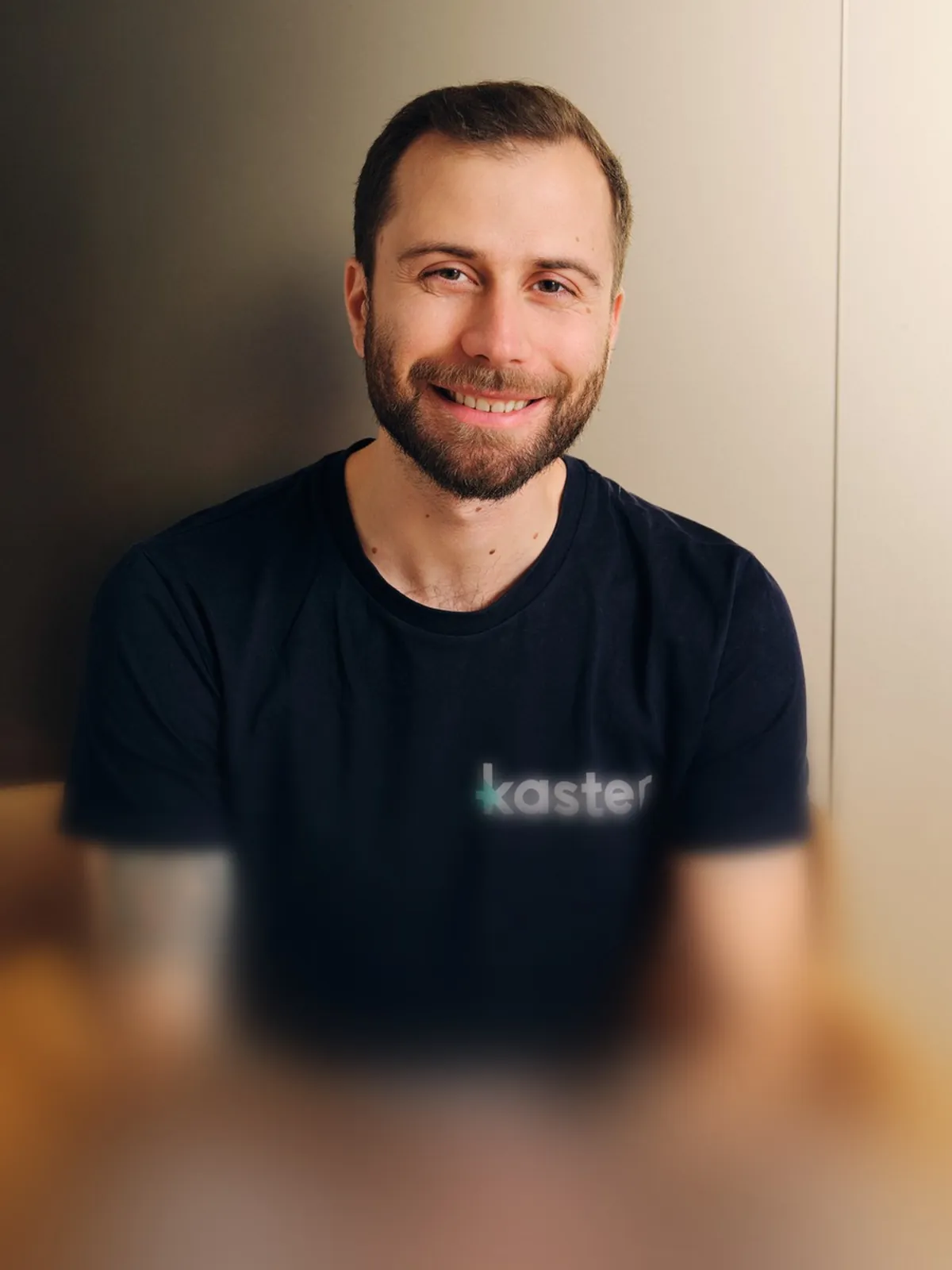
Our founder's older daughter was in treatment...
For Alexandre, the question that came out of it wasn't emotional so much as deep curiosity. Why, with this much technology and this much investment, are drug shortages still routine?
He took that question into his research. The academic literature had plenty of answers, most of them pointing to policy: trade rules, procurement frameworks, regulatory harmonization. Important problems. But almost nothing addressed what happens inside the manufacturing plant. How production is planned. How capacity gets lost to complex decision making. How teams are left to manage complexity with tools that weren't built for it.
That gap felt like an engineering problem, one that hadn't been seriously treated as such. And the dominant assumption, that efficiency and quality are fundamentally at odds in pharma manufacturing, felt less like a law of nature and more like an unsolved problem. That became the foundation for Kaster Technologies: built on the idea that making medicine more accessible starts with how it's made, and that giving production teams the tools to run with less chaos is one of the highest-leverage places to start.
Efficiency & Quality are fundamentally at odds
A familiar claim, and one we kept hearing.
More output means more risk. Tighter schedules mean less room to absorb deviations.
After publishing research in large-scale manufacturing optimization, we weren't convinced. Drug shortages and back-orders have real consequences, but they aren't inevitable. The research pointed at coordination rather than a fundamental trade-off.
We found our first design partner, one of Canada's largest GMP production sites, willing to test that thesis in the real world. The work was straightforward in principle: help them do more with the capacity they already had, without adding headcount or equipment. In practice, it meant rebuilding how their floor was coordinated, shift by shift.
It worked.
The results were significant enough that we co-presented them at international conferences, alongside the plant's own team.
We found a way to run more efficiently without compromising quality. Then we built a company around it.
Partner with us
Send a note about your organization and where you see the overlap. Maybe you share a customer with us, maybe you have a system that needs to talk to ours, or maybe you have a model that needs a regulated environment to prove itself in. Tell us what you see and we will take it from there.
Building resilient medicine supply takes a whole ecosystem
Partnership is structural for us. Building resilient medicine supply takes equipment vendors, integrators, CDMO groups, and research teams all working the same problem from different ends. Model co-development happens through AIM | Labs, our applied research track, which runs inside live plants. If your work touches how pharmaceutical production gets coordinated, we want to hear from you.
We are always looking for exceptional builders and innovators
We are a small team working on a problem that is difficult in an interesting way. We would rather hear from someone who wants to work on it than wait until we have written the right title on a page. If reducing drug shortages by fixing how production gets coordinated is the kind of work you want to do, tell us.
Tell us what you'd want to work on
Send a note along with whatever best represents your work. A CV, a repository, a paper, a project, any of it. Tell us what you would want to build here and why this problem interests you. That is more useful to us than a cover letter.